Surviving Brooklyn winters with artificial grass is easier than you think, provided you take a few proactive steps to protect your investment. Synthetic turf is engineered to withstand freezing temperatures, heavy snow, and ice, but proper cold weather maintenance ensures it looks pristine come spring. Homeowners searching for an artificial grass installation near me can rely on durable materials that handle urban weather extremes with ease.
1. How Should You Clear Snow From Your Turf?
When heavy snow blankets your yard, you will need to clear it without damaging the backing or fibers. Always use a plastic snow shovel instead of a metal one, and push the snow rather than scraping it aggressively. According to the Synthetic Turf Council, modern turf fibers are resilient, but sharp metal edges can still slice through the blades when frozen.
For lighter dustings, a stiff-bristled broom works wonders to sweep away snow accumulation quickly. Pags The Turf Guy recommends clearing heavy drifts before they turn into solid sheets of ice to make maintenance much simpler throughout the winter months.
2. Why Is Choosing the Right Ice Melt Crucial?
Freezing rain and sleet can turn your lawn into a skating rink, but traditional rock salt is not always your best option. While standard sodium chloride will melt ice, it can leave behind a stubborn, powdery residue that requires thorough rinsing once the weather warms up. If you need traction or ice control, consider using calcium chloride instead, which is gentler on synthetic materials.
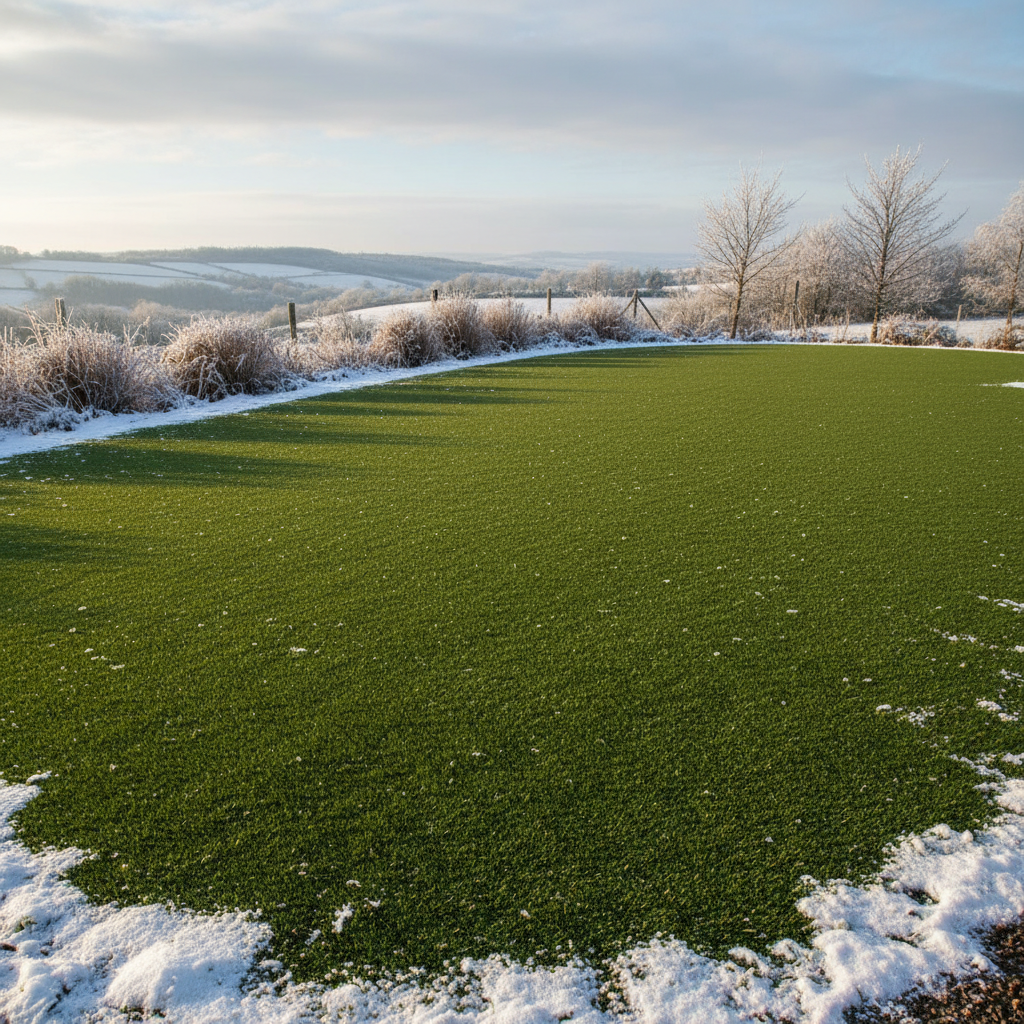
Always avoid chemical deicers containing petroleum products or heavy acids, as these can degrade the polyurethane backing over time. Homeowners exploring our New York City service area often ask about safe winter products to protect their custom residential lawn installation projects.
3. Does Drainage Matter More in Winter?
Proper sub-base drainage is the backbone of any great synthetic turf system, especially when winter thaws bring heavy rain and melting snow. A quality installation features a permeable crushed stone base that allows water to drain at a rate of over 30 inches per hour. If your drainage is compromised, pooling water can freeze into solid blocks of ice that stress the turf fibers.

Before the first freeze arrives, clear your perimeter drains and remove autumn leaves that could clog the system. You can check our free cost calculator to see how professional drainage engineering is factored into quality turf systems.
4. Can You Prevent Matting From Heavy Snow?
Heavy, wet snow packs down with significant weight, which can cause the synthetic grass blades to temporarily lay flat. Once the snow melts and the turf dries out completely, take a few minutes to cross-brush the area using a power broom or a stiff natural-bristle push broom. This simple action lifts the polyethylene fibers back to their upright, natural position.

Regular cross-brushing prevents the infill from compacting unevenly during freeze-thaw cycles. Explore our project gallery to see how resilient professional turf installations maintain their vibrant appearance year-round.
5. How Do You Handle Frozen Pet Waste?
Winter pet care on synthetic turf requires a slightly different routine when freezing temperatures set in. If your pets use the yard, wait until waste is frozen solid before picking it up to avoid smearing residue onto the cold fibers. Avoid using hot water to rinse the area in sub-freezing temperatures, as that water will quickly turn into sheet ice on the surface.
For specialized yards, our pet-friendly turf installation features advanced antimicrobial infill and superior drainage designed to handle winter pet routines seamlessly. Pags The Turf Guy ensures every backyard is built to withstand heavy pet use regardless of the calendar month.
6. When Should You Schedule a Winter Inspection?
Winter is an ideal time to assess the overall health of your landscaping and plan for upcoming spring upgrades. Walk your property after major storms to check for edge lifting, seam integrity, or loose infill around high-traffic zones. Catching minor edge separation early prevents winter winds from expanding the gap.
If you notice any concerns or want to plan a new turf upgrade, reach out to a trusted turf installer near me for professional advice. You can read our customer reviews to see why homeowners across the region trust our expertise.
Proper winter care guarantees your synthetic lawn will transition smoothly into spring without missing a beat. By using plastic shovels, safe ice melt, and keeping drainage clear, your yard stays protected all season long. For expert advice or to schedule a consultation, contact Pags The Turf Guy today for free quotes at 866-913-3899.