6 Tips for Surviving Connecticut Winters with Artificial Grass
Connecticut winters bring a unique set of challenges, from heavy snowfall to freezing temperatures. The good news is that artificial grass is incredibly resilient and designed to withstand these conditions with minimal effort. With a few simple steps, you can ensure your synthetic lawn remains pristine and ready for spring, making it a smart choice for homeowners across Connecticut, New York City, and New Jersey.
1. Clear Away Debris Before the Snow Hits
Before the first major snowfall, take some time to thoroughly clear your artificial grass. Leaves, twigs, and other organic debris can get trapped under snow and ice, potentially leading to matting or mildew if left for extended periods.
A leaf blower or a stiff-bristled broom works wonders for this task. Regular clearing prevents accumulation and ensures your turf can drain properly once the snow melts. This proactive step is crucial for maintaining the longevity and appearance of your artificial grass, whether it's a residential lawn installation or a pet-friendly turf installation.
2. Snow is Your Friend, Mostly
One of the best things you can do for your artificial grass during winter is to let the snow accumulate naturally. A layer of snow acts as an insulator, protecting the turf fibers from harsh winds and extreme cold. It also helps to keep the infill in place.
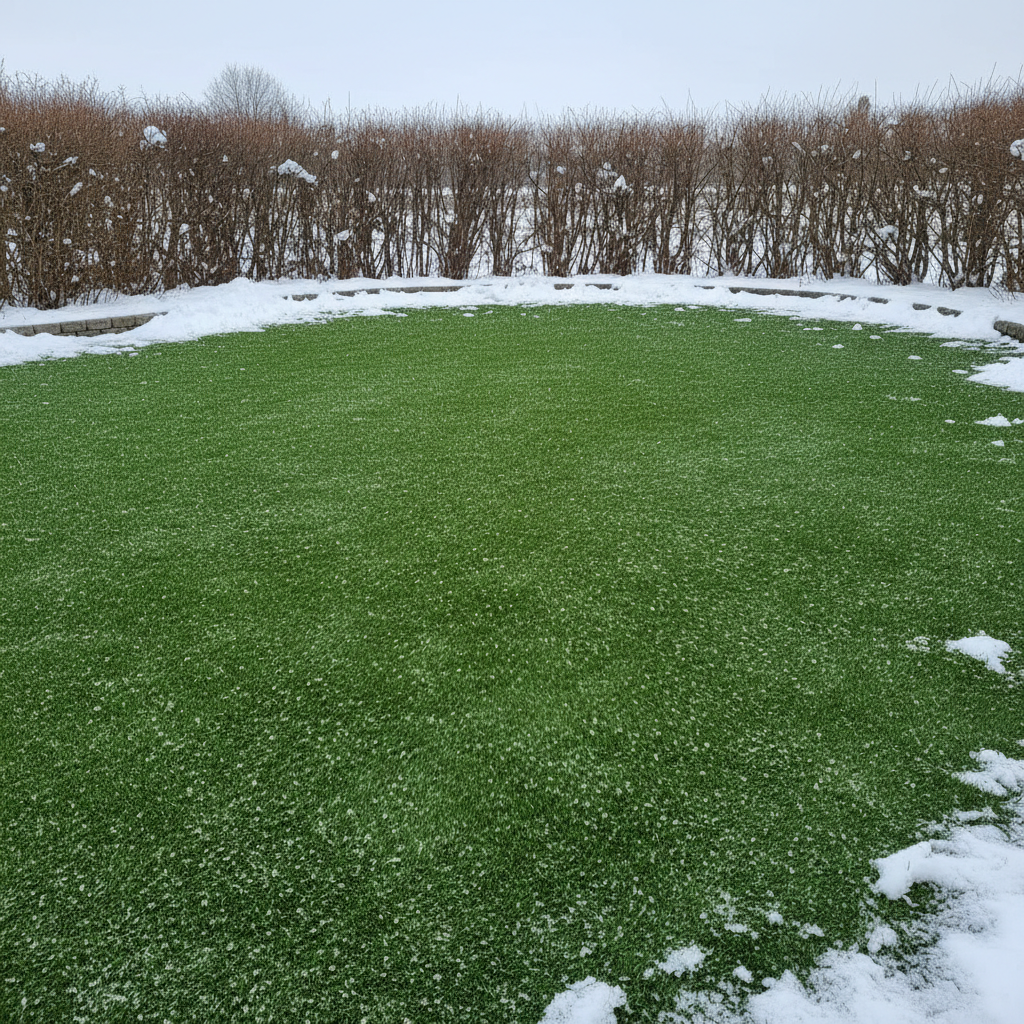
Avoid walking on heavily snow-covered turf if possible, as this can compress the snow into ice, making it harder to remove. If you have a custom putting green installation, consider covering it with a tarp for extra protection against heavy foot traffic and excessive snow compaction.
3. Shovel Smart, Not Hard
If you absolutely must clear snow from your artificial grass, use a plastic shovel or a snowblower set to a high clearance. Metal shovels can damage the turf fibers or backing, so it's best to avoid them entirely. Always shovel in the direction of the turf blades to minimize disruption.

For lighter snow, a stiff broom can often do the trick. Remember, the goal is to remove snow without disturbing the infill or damaging the turf. Our team at Pags The Turf Guy always recommends gentle methods to preserve your investment.
4. Tackle Ice with Care
Ice can be tricky. While artificial grass is designed to drain well, ice can form from melting and refreezing snow. The best approach is to let it melt naturally. If you need to remove ice for safety reasons, avoid using rock salt or harsh chemicals, as these can potentially damage the turf fibers or alter the infill.

Instead, consider using calcium chloride-based ice melt, which is generally safer for artificial turf. Always test a small, inconspicuous area first. For persistent ice, a gentle broom or a plastic shovel can help break it up once it has softened slightly.
5. Keep Drainage Clear
Proper drainage is a hallmark of quality artificial grass installation, especially in areas like New York City and New Jersey where sudden thaws can lead to significant water runoff. Ensure that your turf's drainage system, including any perimeter drains, remains free of debris.
Blocked drainage can lead to standing water, which can freeze and cause issues. A quick check of the edges and any nearby gutters can prevent potential problems. This is especially important for playground turf installation where safety is paramount.
6. Post-Winter Refresh and Inspection
Once the Connecticut winter finally breaks and spring arrives, give your artificial grass a good refresh. Rake or broom the turf against the grain to help stand the blades back up, especially in high-traffic areas. This process, known as cross-brushing, revitalizes the look and feel of your lawn.
Inspect your turf for any areas that might need a little extra attention. If you notice any issues or simply want to ensure your artificial grass is in top shape, consider reaching out to a professional turf installer near me. Pags The Turf Guy is always here to help with any questions or services for your artificial grass installation near me.
Artificial grass is a fantastic, low-maintenance solution for homeowners in Connecticut, New York City, and New Jersey, even through the harshest winters. By following these simple tips, you can enjoy a beautiful, green lawn year-round without the typical winter worries. For more information on maintaining your turf or to explore options for your home, check out our frequently asked questions or browse our project gallery.
Ready to experience the benefits of artificial grass for yourself? Contact Pags The Turf Guy today for a free quote at 866-913-3899. We're your trusted partner for premium artificial grass solutions across the tri-state area. You can also visit our contact us for a free quote page to get started!
Frequently Asked Questions
Can artificial grass withstand heavy snow and ice in Connecticut?
Yes, artificial grass is specifically designed to be extremely durable and can easily withstand heavy snow and ice common in Connecticut winters. The synthetic fibers are engineered to resist freezing and thawing cycles without cracking or becoming brittle.
Do I need to remove all the snow from my artificial lawn?
It is generally best to let snow melt naturally on artificial grass, as it acts as an insulator. If removal is necessary for access or safety, use a plastic shovel or a snowblower set high to avoid damaging the turf fibers or infill.
What should I use to melt ice on my synthetic turf?
Avoid using rock salt or harsh chemicals, as they can potentially harm your artificial grass. Calcium chloride-based ice melt is a safer alternative, but it's always best to let ice melt naturally if possible to prevent any risk to your turf.