Surviving New Canaan, CT winters with artificial grass is remarkably straightforward when you know the right approach. While natural lawns go dormant, turn brown, and struggle under heavy snow and freezing temperatures, high-quality synthetic turf remains resilient. Homeowners searching for artificial grass installation near me often wonder how cold weather affects their investment. Here are six practical tips to keep your lawn looking pristine all winter long.
1. Let Mother Nature Handle the Snow
One of the greatest benefits of having synthetic turf is that you do not need to rush outside to clear every light dusting of snow. According to industry standards, light snow can be left to melt naturally without causing any damage to the polyethylene or polypropylene blades. The permeable backing allows moisture to drain seamlessly as temperatures rise.
If you are planning a residential lawn installation or want to upgrade your property before the next freeze, patience is your best ally. Letting snow melt on its own prevents accidental pulling of the turf fibers or displacement of the infill.
2. Use Only Plastic Shovels for Heavy Accumulation
When a major blizzard hits New Canaan and you urgently need to clear a path across your lawn or custom putting green installation, tool selection is critical. Always use a plastic snow shovel rather than a metal one.
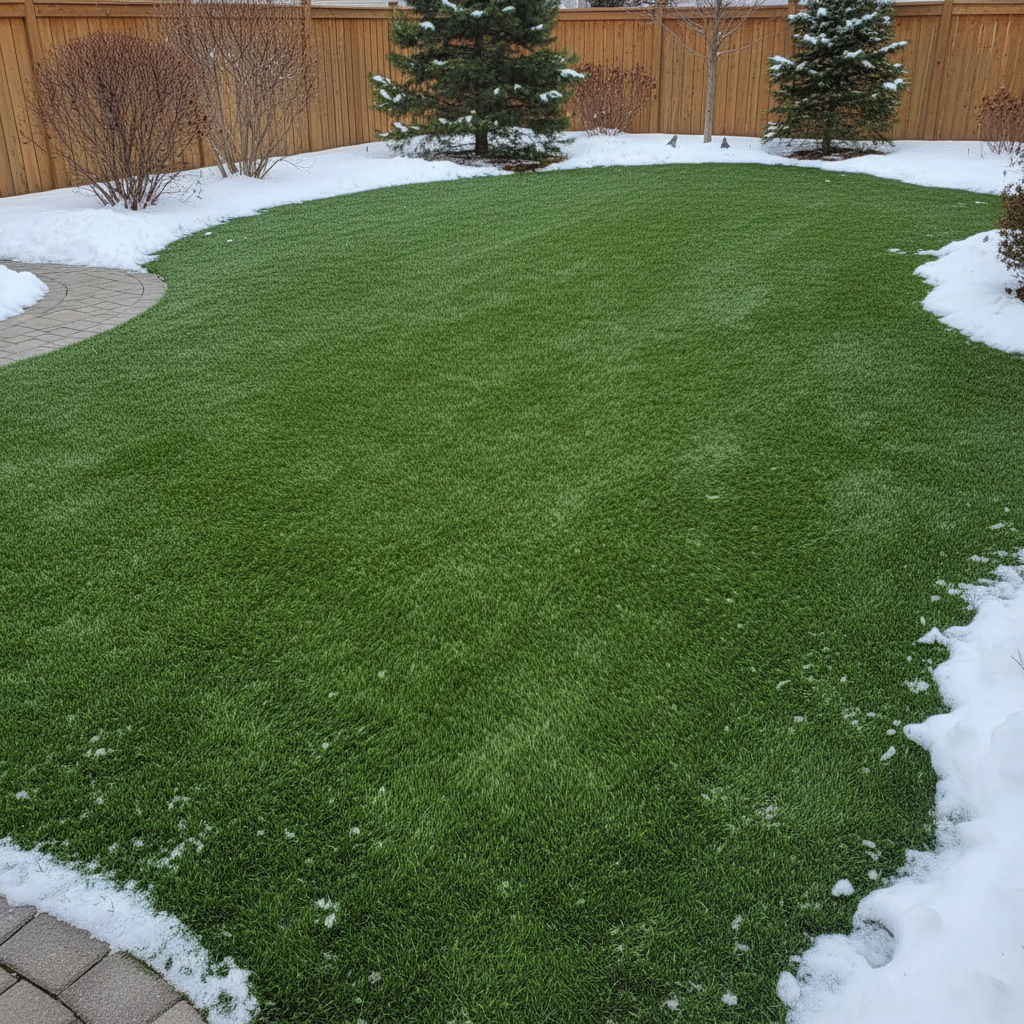
Metal shovels and sharp edges can easily gouge, tear, or cut into the synthetic turf backing. Hold the plastic shovel just above the surface or use a soft-bristled push broom to gently clear away deep snow without harming the delicate blades underneath.
3. Say No to Rock Salt and Chemical De-Icers
It can be tempting to throw rock salt or chemical ice melt onto slippery turf areas, but this habit can ruin your lawn. Harsh chemicals and high sodium levels can seep into the turf backing, contaminate the infill, and damage the drainage system.

If ice becomes a persistent hazard on your pet-friendly turf installation, avoid chemical treatments entirely. Instead, allow the ice to thaw naturally, or apply a light layer of clean sand if temporary traction is an absolute necessity.
4. Clear Away Autumn Leaves Before the Freeze
New Canaan is famous for its gorgeous fall foliage, but decaying leaves left on your turf through winter can cause major headaches. Trapped wet leaves block the drainage holes and can lead to mold growth or unpleasant odors when winter rain and snow pack them down.
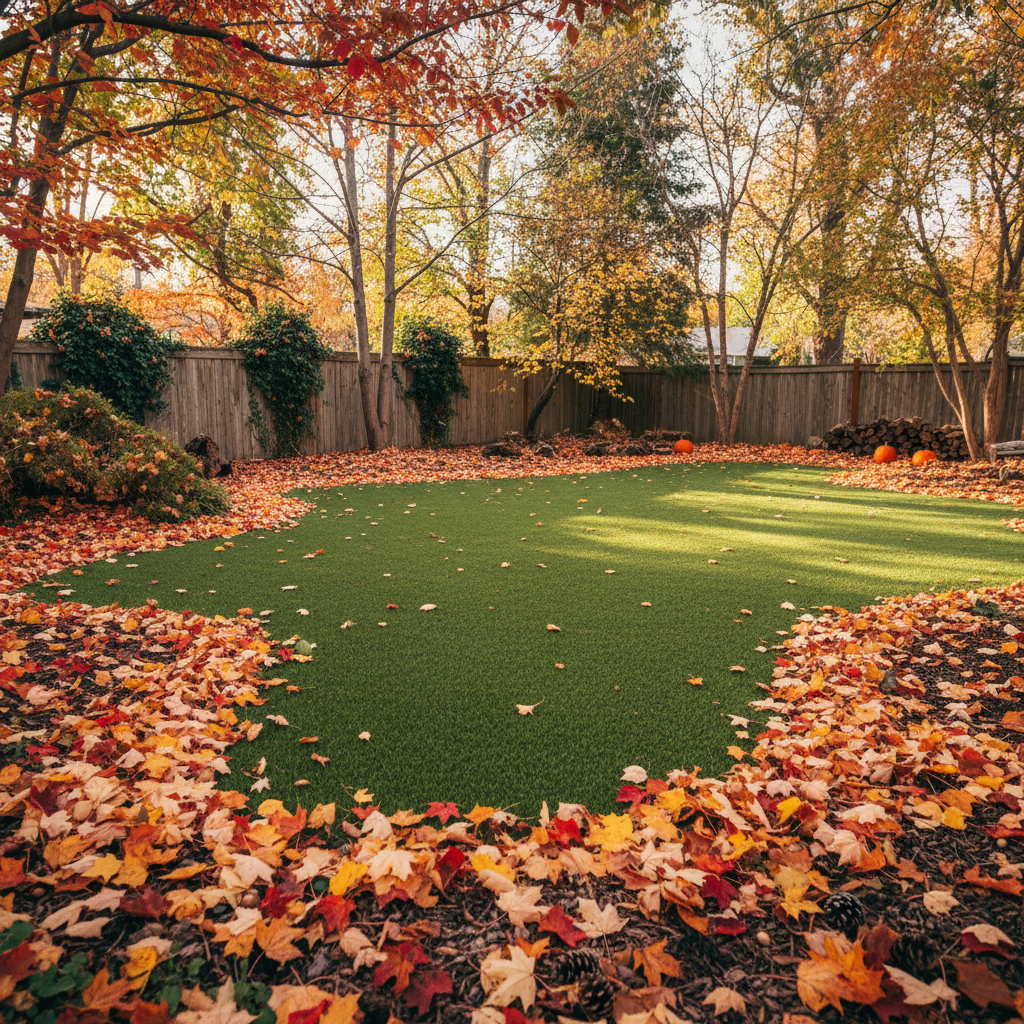
Use a leaf blower on a low setting or a plastic-tined rake to keep the surface clear. For homeowners mapping out future upgrades, our free cost calculator can help you budget for advanced turf systems designed with superior drainage capabilities.
5. Check and Maintain Clear Drainage Paths
Proper drainage is the backbone of any durable synthetic lawn. Before freezing temperatures set in for good, ensure that perimeter drains and sub-base layers are completely free of obstruction.
When melting snow cannot drain efficiently, pooling water can turn into sheets of solid ice. A qualified turf installer near me can inspect your property to guarantee that your sub-base handles the freeze-thaw cycles typical of the Northeast climate without trapping moisture.
6. Wait for a Warm Day to Brush Flattened Fibers
Heavy snow pack and foot traffic can compress turf blades over the course of the winter. Once spring arrives and the ground completely thaws, you will want to restore that upright, lush appearance.
Always wait for a dry, moderately warm day before brushing your turf. Use a stiff-bristled broom with synthetic bristles, brushing gently against the grain to lift the fibers and evenly redistribute settled infill. For expert advice or to explore our project gallery, Pags The Turf Guy is here to help homeowners across Connecticut, New York City, and New Jersey maintain flawless outdoor spaces all year round.
Ready to upgrade your property with durable, low-maintenance synthetic turf? Contact Pags The Turf Guy today for your free quote at 866-913-3899.