Daycare Playground Turf Installation Case Study: ASTM F1292 Fall-Height-Rated Safety Surface for 30+ Children Daily
How Pags The Turf Guy installed artificial turf at a daycare playground with fall height safety-rated impact pads, composite nailer board perimeter, and filament split film fiber for heavy daily use by children.
Summary
Pags The Turf Guy installed artificial turf at a daycare playground where 30+ children play daily. The project required fall height safety-rated impact pads (1-inch minimum for structures over 4 feet, 2-inch for up to 9 feet), a composite nailer board perimeter to eliminate exposed nails in the play area, and filament split film fiber turf engineered for extreme daily foot traffic. The result is a safe, durable, mud-free play surface that meets ASTM F1292 standards.
Project Overview
| Detail | Value |
|---|---|
| Project Type | Daycare / Commercial Playground |
| Service Area | Connecticut, New York City & New Jersey |
| Safety Standard | ASTM F1292 fall height attenuation |
| Impact Pad (4+ ft structures) | Minimum 1-inch pad |
| Impact Pad (up to 9 ft structures) | 2-inch pad |
| Perimeter System | 4-inch composite nailer board (no ground nails) |
| Turf Fiber | Filament split film for high-traffic durability |
| Nailer Board Material | Composite (preferred over pressure-treated wood) |
| Daily Usage | 30+ children, heavy foot traffic |
The Problem
The daycare had natural grass under and around their playground equipment. With 30+ children using the area every day, the grass was worn down to bare dirt in high-traffic zones. Rain turned the playground into a muddy, unusable mess. The uneven surface created tripping hazards, and the facility needed a solution that would hold up under constant daily use while meeting safety requirements for fall protection around elevated play structures.
The biggest concern was child safety. Several of the playground structures exceeded 4 feet in height, meaning the surface underneath needed to provide certified fall height protection. Standard residential turf installation methods - including the use of ground nails - were not appropriate for a facility where young children play at ground level every day.
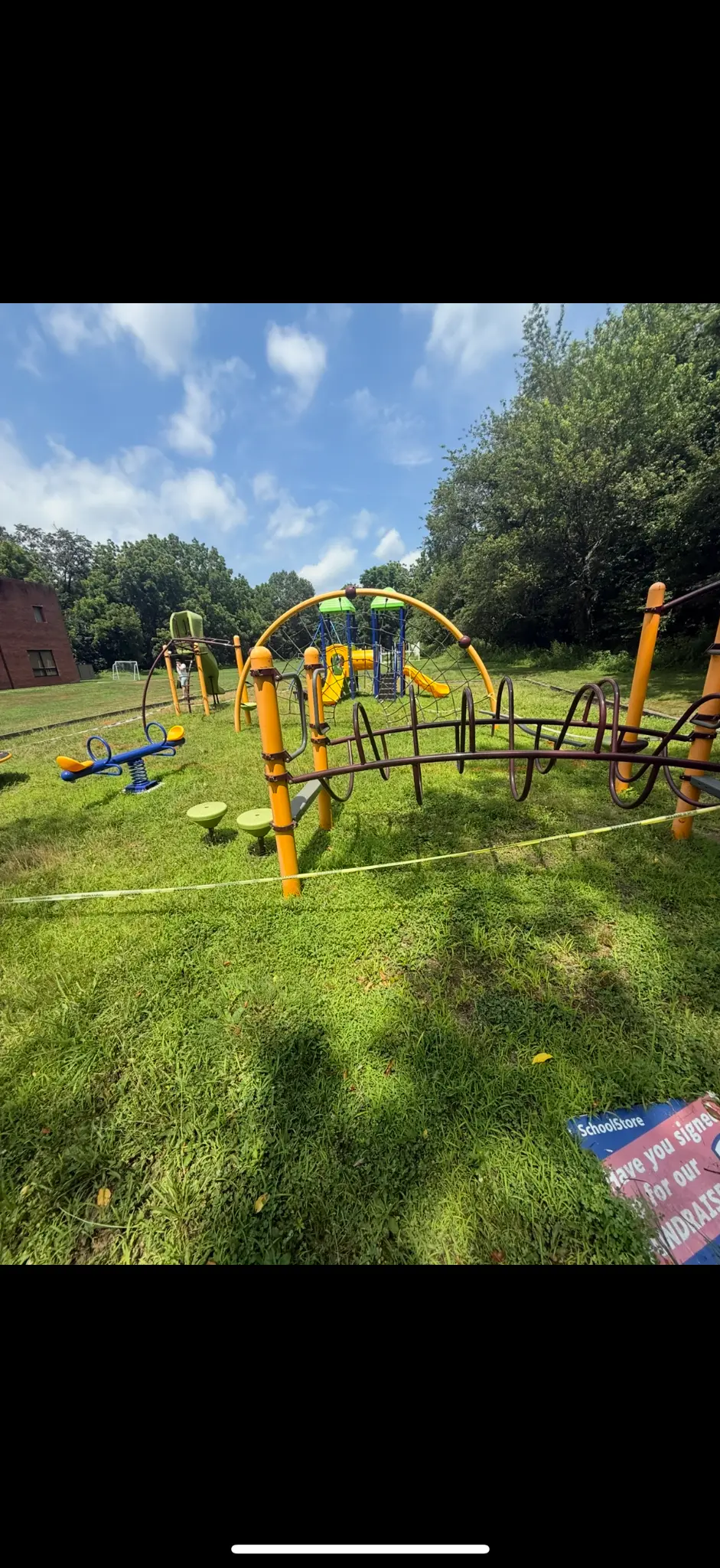
Before: The daycare playground on natural grass - showing wear patterns and uneven surfaces around the play equipment.
The Solution
Fall Height Safety-Rated Impact Pads
The most important factor in a daycare installation is the fall height safety rating. Any structure over 4 feet tall that a child could fall or jump off of needs at least a 1-inch impact pad underneath. Structures up to 9 feet in fall height require a 2-inch impact pad. The pad ensures the safety of children in case of a fall. We dug extra depth to accommodate the impact pad while building the base up to the correct finished height, so the surface sits at the right level relative to the playground equipment.
Composite Nailer Board Perimeter
On commercial projects like daycares, a nailer board is installed on the perimeter so that no nails are used in the play area. The turf is secured to the nailer board rather than being nailed directly into the ground, eliminating any risk of exposed nail heads where children play. We used a 4-inch composite board because it does not deteriorate and fall apart over time. While pressure-treated wood is an option, we prefer composite boards because they are superior and last the longest - they will not rot, splinter, or warp.
Filament Split Film Fiber for Heavy Traffic
For any project in an extremely high-traffic area - such as a daycare or a sports field - you should use a filament split film fiber. This fiber type is engineered to withstand constant use from dozens of children running, playing, and jumping on the surface every day. Standard residential turf fibers would break down quickly under this kind of commercial use, but the filament split film maintains its structure, bounce-back, and appearance for years even under the heaviest foot traffic.
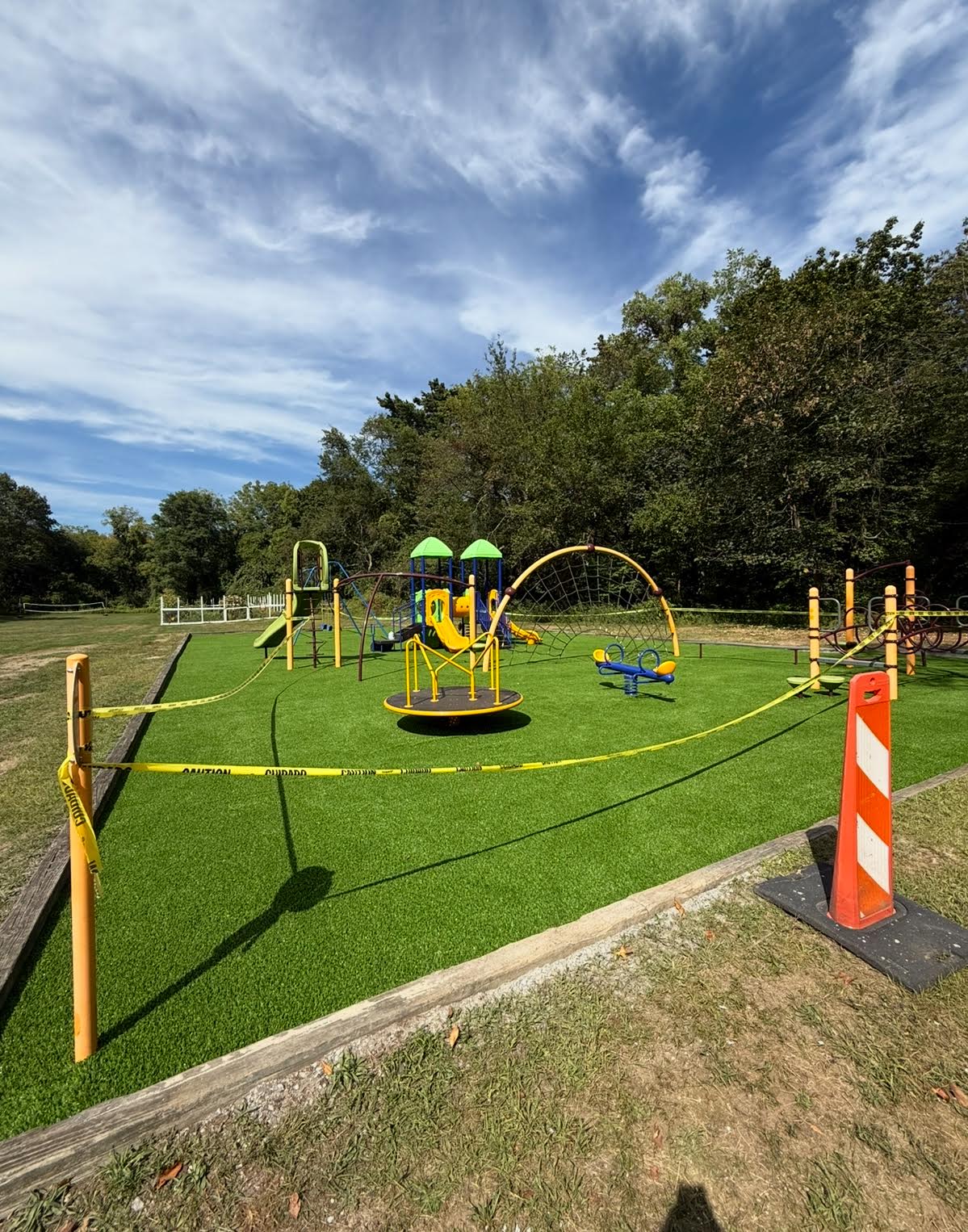
After: The completed daycare installation - vibrant artificial turf with impact pad underneath, composite nailer board perimeter, and filament split film fiber for heavy daily use.
Customer Feedback
"The kids can play outside rain or shine now - no more mud, no more canceling outdoor time. Derek explained the safety pad requirements and the composite nailer boards before we even asked. It is clear he has done this before and knows what a daycare needs. The parents have noticed the difference too."
Frequently Asked Questions
What impact pad thickness does a daycare playground need?
Any playground structure over 4 feet tall requires a minimum 1-inch impact pad underneath the turf. Structures up to 9 feet in fall height require a 2-inch impact pad. The pad must meet ASTM F1292 standards for fall height attenuation. This is not optional - it is a safety requirement that protects children in case of a fall from elevated play equipment.
Why are nails not used in daycare turf installations?
For child safety, daycare and playground installations use a composite nailer board perimeter instead of ground nails. The turf is secured to the nailer board, which eliminates any risk of exposed nail heads in areas where children play. This is standard practice for any commercial installation where children are present.
What type of turf fiber holds up best at a daycare?
Filament split film fiber is the best choice for daycares and other high-traffic commercial areas. It is engineered to withstand constant daily use from dozens of children without breaking down. Standard residential turf fibers would wear out quickly under this level of traffic, but filament split film maintains its structure, bounce-back, and appearance for years.
Does the installation require deeper excavation than a residential project?
Yes. The impact pad thickness (1 or 2 inches depending on fall height requirements) must be factored into the total excavation depth. The installer digs extra depth to accommodate the pad while building the base up to the correct finished height. This ensures the surface sits at the right level relative to the playground equipment and surrounding areas.
Why choose composite nailer boards over pressure-treated wood?
Composite boards do not rot, splinter, warp, or deteriorate over time. In a daycare environment where children are constantly running and playing near the perimeter, composite material is the safest and most durable option. Pressure-treated wood can eventually break down and create splinter hazards, which is unacceptable in a childcare setting.
Can the turf handle rain and wet conditions?
Yes. Unlike natural grass, artificial turf drains quickly and does not turn into mud. Children can play outside shortly after rain without tracking mud indoors. The drainage system built into the base allows water to pass through the turf and base material, keeping the surface dry and usable in all weather conditions.