Residential Putting Green Installation Case Study: Custom Chipping-Ready Green with Strategic Cup Placement
How Pags The Turf Guy designed and built a backyard putting green engineered for both putting and chipping - with 8-10 inches of compacted base, split film fiber, 5mm impact pad, and strategic cup placement for maximum playability.
Summary
Pags The Turf Guy built a custom residential putting green designed for both putting and chipping. The project required 8 to 10 inches of compacted three-quarter pack base, concrete cup sleeves installed at flush level, split film fiber turf with 7 lbs/sq ft sand infill, and a 5mm impact pad to absorb chip shots from distance. Strategic cup placement ensures every putt from cup to cup is a different distance and angle, with no cups interfering with other putting lines.
Project Overview
| Detail | Value |
|---|---|
| Project Type | Residential Putting Green (Putting + Chipping) |
| Service Area | Connecticut, New York City & New Jersey |
| Base Material | Three-quarter pack with fines |
| Base Depth | 8-10 inches, compacted |
| Cup Installation | Concrete sleeves, flush level |
| Fringe Sand Infill | ~3 lbs/sq ft silica clean sand |
| Putting Green Sand Infill | ~7 lbs/sq ft silica clean sand |
| Fiber Type | Split film fiber (for chipping capability) |
| Impact Pad | 5mm under green surface |
| Turf Type | Professional-grade nylon putting surface |
The Problem
The homeowner wanted a backyard putting green but also needed the ability to chip onto the green from various distances. A standard putting green would not hold chip shots - the ball would land and roll off the surface, making the green frustrating to use for anything beyond short putts. The challenge was designing a green that plays well for both putting and chipping while fitting safely into the backyard layout.
Safety was also a factor. If the customer is going to be chipping at all from any distance, you need to find the best area of the backyard so that in case the customer misses or skulls a shot, there is no one in harm's way and no one else's property could be damaged. The placement of the hitting mat and the direction of shots had to be planned carefully.
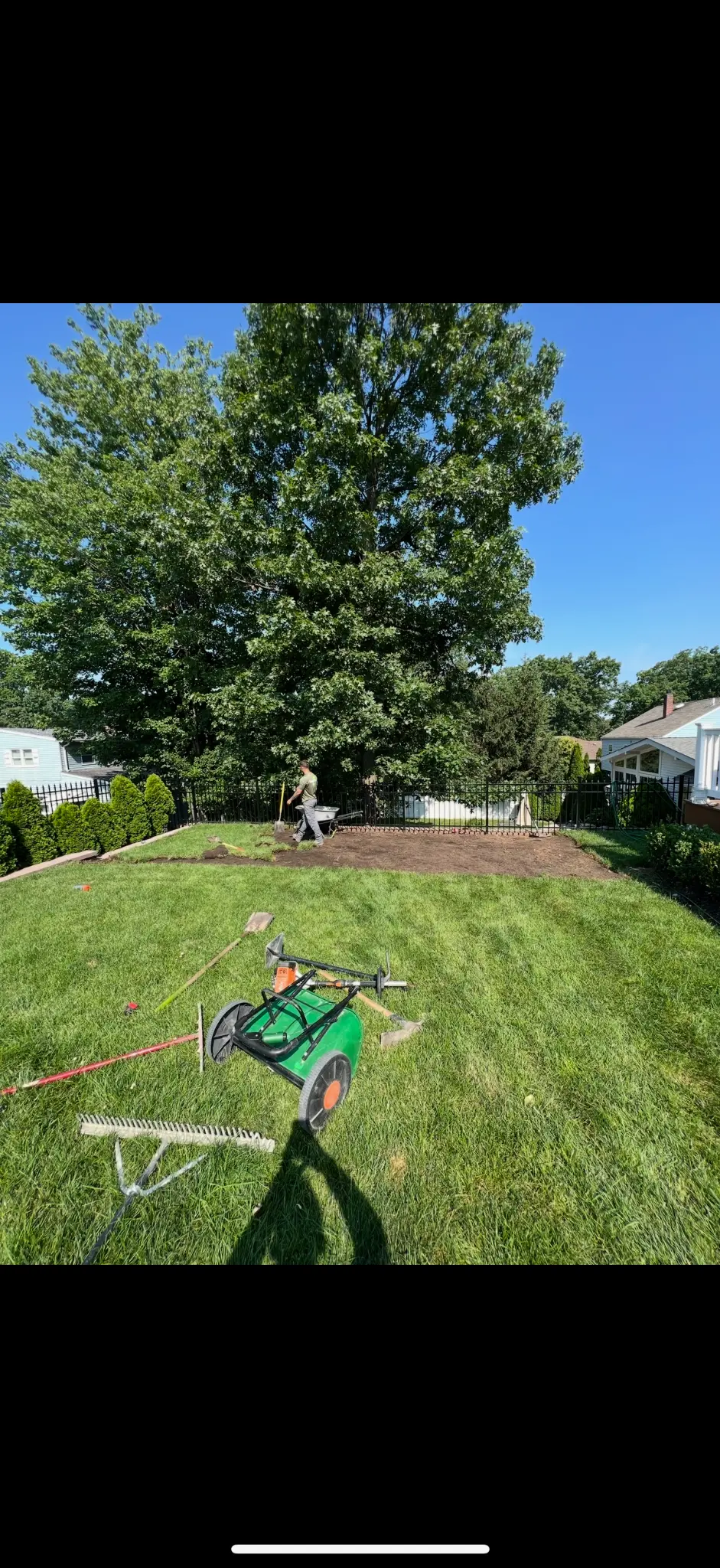
Step 1: Excavation and site preparation - clearing the designated area for the putting green.
The Solution
Base Preparation - 8 to 10 Inches of Compacted Material
We built a proper base underneath - 8 to 10 inches of three-quarter pack base material with fines. This ensures the putting green surface is smooth and flat. A poorly prepared base results in uneven ball roll. We also inlaid concrete sleeves for the cups at a correct flush level so balls roll in properly. Each cup must sit perfectly flush with the turf surface.
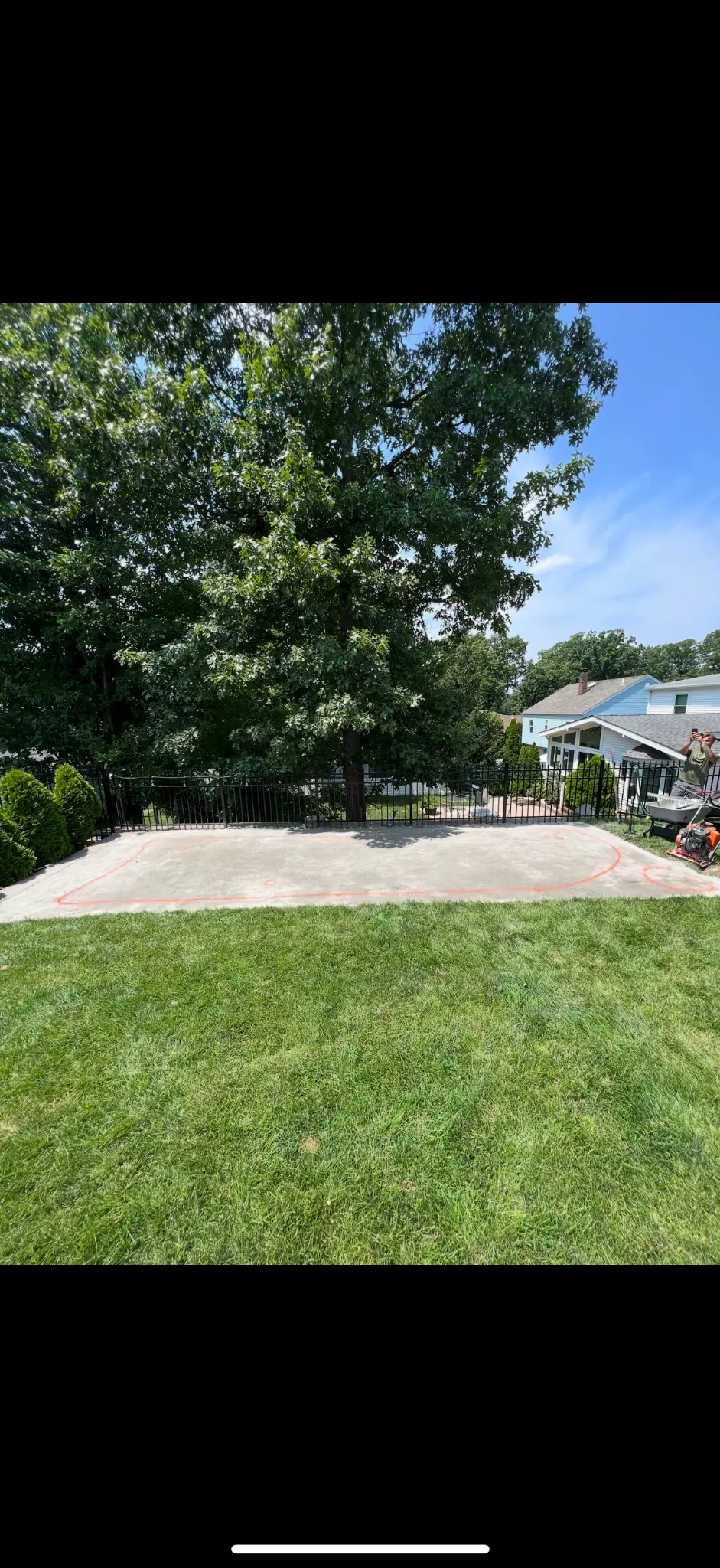
Step 2: Compacted base with cup positions marked - 8 to 10 inches of three-quarter pack base material with fines.
Split Film Fiber and Sand Infill for Chipping
We maintained a proper fringe-to-putting-green ratio for aesthetics without taking up too much playing space. The fringe gets about 3 pounds per square foot of silica clean sand. The putting green gets about 7 pounds per square foot. Because the customer will be chipping onto the green, we used a split film fiber to hold the proper 7 lbs/sq ft of sand infill. This heavier sand weight absorbs chip shots so the ball holds and lands properly even from longer distances.
5mm Impact Pad for Long-Distance Chip Shots
We added a 5mm impact pad under the green so that longer chip shots still hold spin and land accordingly. The impact pad absorbs the energy of the ball on impact, preventing it from bouncing and rolling off. Combined with the 7 lbs/sq ft sand infill in the split film fiber, this creates a surface that handles everything from delicate putts to aggressive chip shots.
Strategic Cup Placement
We ensured that putting from cup A to cup B is a different distance from cup B to cup C, and so on. We also made sure that no cups in the middle impose on any putt from one cup to another. This ensures the customer can play every angle of the putting green from cup to cup. This strategic placement is what separates a professionally designed green from a DIY installation.
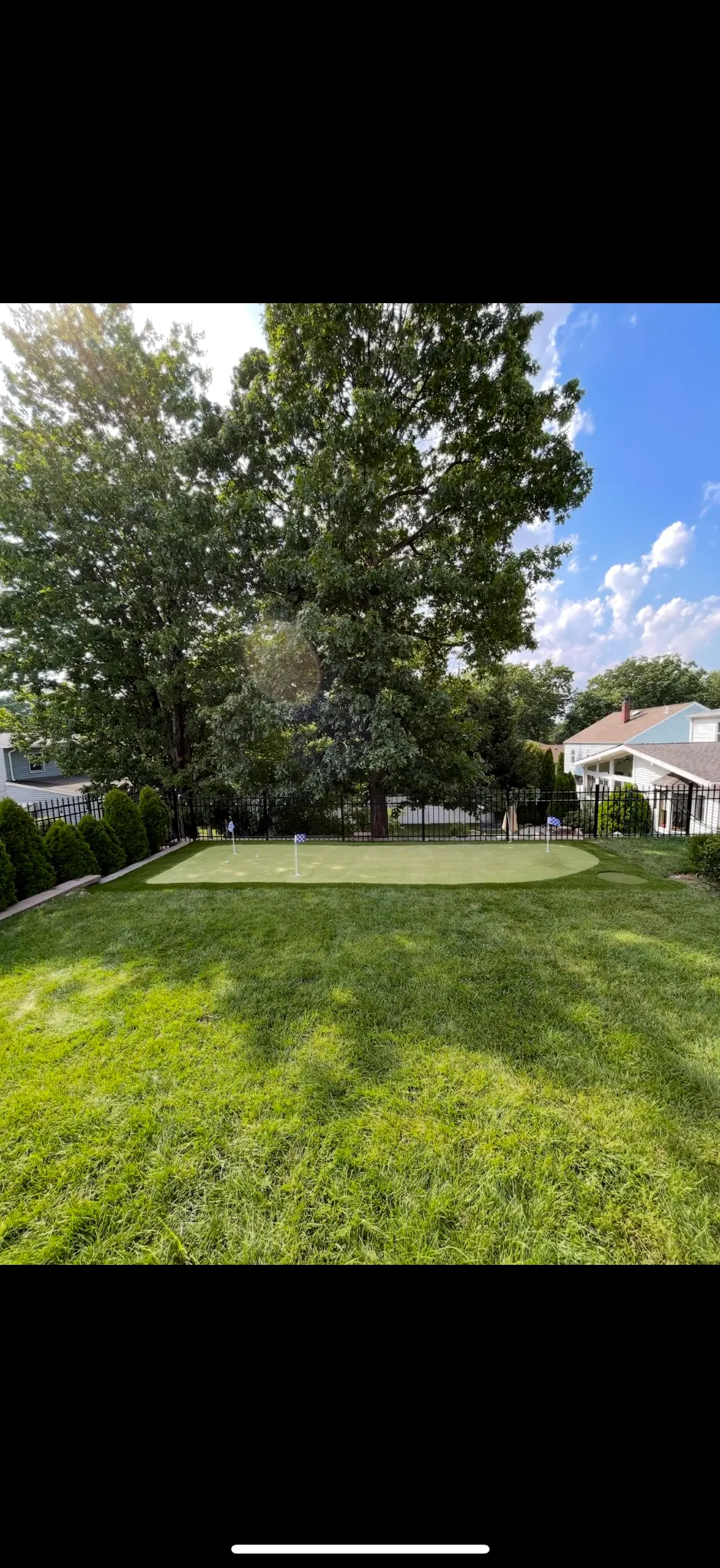
The finished putting green - fringe border, multiple cup positions with flags, and a professional-grade surface for putting and chipping.
Customer Feedback
"Derek designed the green so I can chip from the yard and the ball actually sticks. Other installers I talked to had no idea about the sand weight or impact pad - Derek explained every detail before we started. The cup placement is perfect - every putt is a different challenge. Best investment I have made in the backyard."
Frequently Asked Questions
Can you chip onto a residential putting green?
Yes, but only if the green is built for it. A chipping-ready green requires split film fiber turf with 7 lbs/sq ft of sand infill and a 5mm impact pad underneath. Without these, chip shots will bounce and roll off the surface. Standard putting-only greens use lighter sand and different fiber that cannot absorb the impact of a chip shot.
How thick does the base need to be for a putting green?
A properly built putting green requires 8 to 10 inches of compacted three-quarter pack base material with fines. This depth ensures a smooth, flat surface with consistent ball roll. Skipping base depth leads to settling, uneven surfaces, and poor putting performance over time.
What is the difference between fringe sand and putting green sand infill?
The fringe area gets about 3 pounds per square foot of silica clean sand, while the putting green surface gets about 7 pounds per square foot. The heavier sand on the green is what allows chip shots to land and stick rather than bouncing off. Both use silica refining clean sand.
How are the cups installed in a putting green?
Cups are installed using concrete sleeves that are inlaid during the base preparation phase - before the turf goes down. Each sleeve must be set at a correct flush level so balls roll into the cup naturally. This is a detail that less experienced installers often get wrong, and it significantly affects how the green plays.
Does cup placement matter on a putting green?
Yes. Each cup should be a different distance from every other cup, and no cup in the middle should interfere with putts between other cups. This gives the homeowner a variety of putting challenges from every angle. Poor cup placement results in repetitive putts and wasted green space.
How long does a residential putting green last?
A professionally installed putting green with proper base, split film fiber, and correct sand infill will last 15 to 20 years with minimal maintenance. The 5mm impact pad protects the turf from chip shot damage, and the compacted base prevents settling and drainage issues over time.